How to Take Notes You Can Actually Use Later
Quick answer
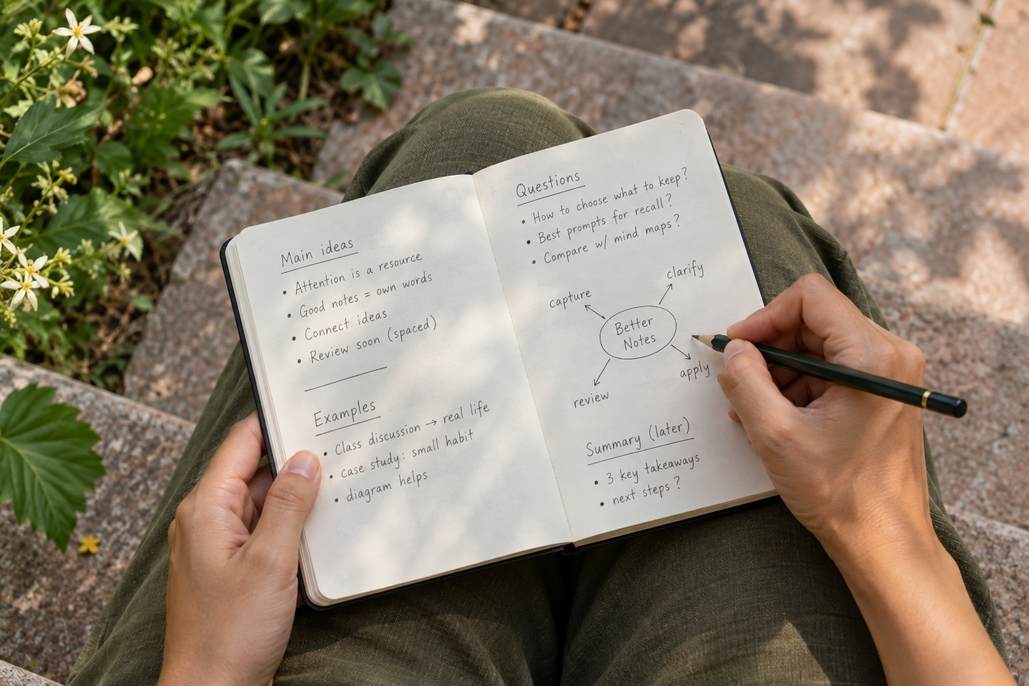
Capture main ideas, supporting examples, and unanswered questions in your own words. Afterward, add a short summary and prompts that help you retrieve the information.
Step-by-Step
Capture structure before every detail
Record the main idea and how supporting points connect to it.
Mark questions while they arise
Flag confusing terms or missing steps so you can resolve them later.
Review and summarize the main message
Add a brief summary and questions you can answer without looking.
Quick Check
Two quick choices. A next step for you.
- 1Your situation
- 2A closer look
What are you facing right now?
What if I cannot write fast enough?
What are you trying to capture?
Why are my notes confusing later?
What is unclear when you return?
Should I type or use paper?
What makes your current method difficult?
How do I review my notes?
What needs attention first?
Your next step
Choose your situation to read the advice.
What if I cannot write fast enough?
Every word from the speaker
Prioritize key ideas, examples, and questions. Use abbreviations you understand rather than attempting a full transcript.
Key ideas but too many details
Keep the main idea and one useful example. Note unresolved questions so you can fill gaps when reviewing.
Why are my notes confusing later?
Abbreviations and missing context
Expand unclear abbreviations and add context soon afterward, while the original discussion is still familiar.
How the ideas connect
Review the notes soon afterward and explain the connections in your own words. Add the context needed to use them later.
Should I type or use paper?
Capturing the ideas quickly
Choose the method that helps you capture key ideas and questions. Avoid turning either typing or handwriting into a complete transcript.
Reviewing and understanding later
Choose the format you can review effectively. Check whether the notes help you understand and retrieve the material.
How do I review my notes?
The main message is unclear
Write a short summary in your own words. Check how the main idea and supporting examples connect, and mark anything you still need clarified.
I want to check my understanding
Turn key points into questions. Put the notes aside, answer from memory, then check your answers and correct missing details.
Common Mistakes
Copying without identifying the point
A complete transcript may still leave the central argument hard to find.
Leaving abbreviations unexplained forever
Unclear shorthand can become difficult to interpret after the discussion fades.
Never returning to your notes
Review and retrieval turn stored information into material you can use.
Important Things to Know
Get permission before recording others. Follow course or workplace rules for confidential information and shared notes.
Bottom Line
Write notes for your future self. Make the main idea, supporting evidence, and unresolved questions easy to find and revisit.
Next article